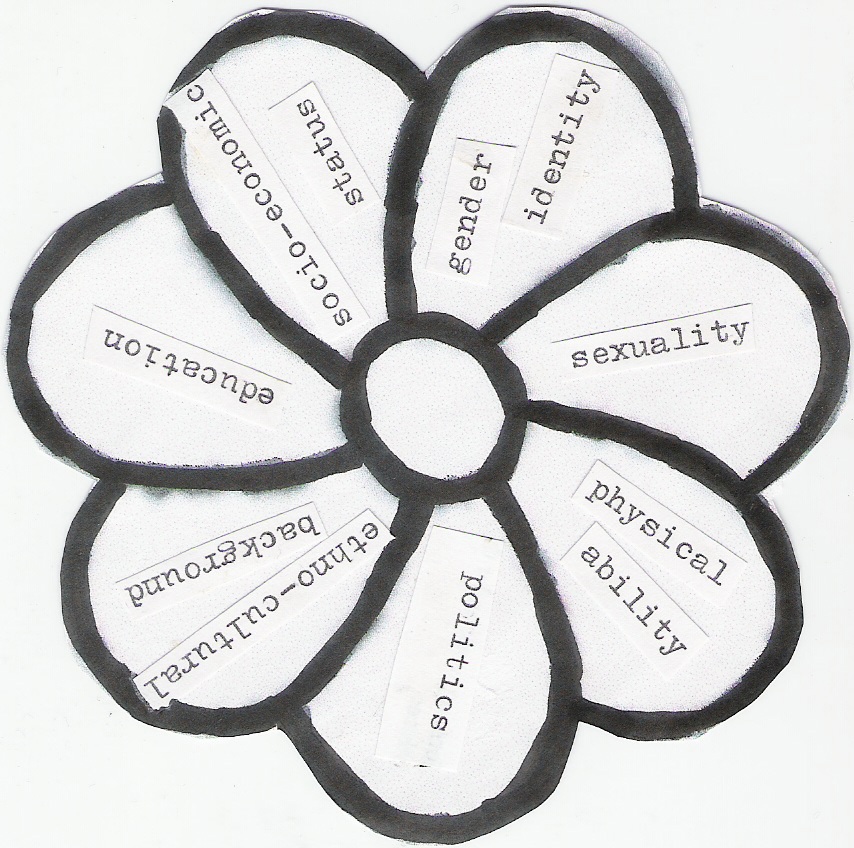
Carbado defines privilege as "those of us who unquestionably accept the racial, gender and heterosexual privileges we have - those who fail to acknowledge our victimless status with respect to racism, sexism, and homophobia are also perpetrators of discrimination.” The privileges that Carbado focuses on are Heterosexual, Male, and White, privilege. He first identifies the highest form of privilege, that of the White heterosexual male. Carbado then divides the remainder of his essay into two discussions: male privilege and heterosexual privilege (race is taken into account as a subtopic in each section).
The White heterosexual male is the template for mankind. "He is in a sense, the norm. (...) we are all defined with him in mind." (192)If one does not fit into the category of the white heterosexual male, they are then "othered" and began to lose privilege. White heterosexual women have less privilege than the white heterosexual male and a black heterosexual male has even less privilege. Whites are privileged because their race is the norm so much so that as Barbra Flagg states a "white person has an everyday option not to think about [them self] in racial terms at all." (193) the concept of not thinking about daily positioning or actions is called normatively. Normatively is created by the societies in which we live.
White Privilege
Carbado draws from the writings of Peggy MacIntosh who reflects on the unearned advantages she experiences as white women. "For example, precisely because she is white McIntosh did not have to educate her children to be aware of the systematic racism for their own daily physical protection." Carbado lists 40 ways in which white males experience privilege which include “Prospective employers will never ask me if I plan on having children. (…) I can walk in public alone, without the fear of being sexually violated.” Carbado uses the writings of Flagg and MacIntosh because they suggest that heterosexual white males could reflect on their own privilege. The ultimate goal is for both sides those who experience privilege and those who do not to understand that the discrimination they cause with their privileges.
Heterosexual Privilege
“Like maleness, heterosexuality operates as an identity norm, the “what is” or “what is supposed to be” of sexuality. (…) Scientists aren’t searching for a gay, not heterosexual or sexual orientation gene.” (198) Carbado argues that heterosexuals should fight this normativity and then discusses the struggles that arise when this is attempted. The challenging of heteronormativity by heterosexuals may result in being judged by society. This is because there is a stigma attached to people who support causes in social change; they are assumed to have a personal stake in the matter. So if a straight man starts to talk about the discrimination of homosexuals many people assume that he is in fact a homosexual himself.
Carbado then presents the new ways “coming out” has been tailored for heterosexuals. People are “coming out” as republicans, star trek fans, or stamp collectors. The term has begun to devalue the “economic, psychological, and physical harms that potentially [occur in] the gay and lesbian coming out (or outing) process.” Heterosexuals are also “coming out” as heterosexuals.
This can affect the homosexual “coming out” process in positively by undoing the assumption that one is heterosexual and thus does not need to establish their sexual orientation. However, this can also negatively affect the homosexual “coming out” process because it can be used as a tool to reestablish heteronormativity. For example, as heterosexuals who want to be advocates of homosexuality community may choose to “out” themselves as heterosexual allies first.
In this discussion on heterosexual privilege, Carbado also discusses race. When the notion of race is added to homosexuality it is at times harder to do away with the norms. This is because when people of color who are already “othered” by their race, try and stray from other forms in which they can be marginalized. Thus the stigma arises that a black man cannot be Gay because that would pull him even further from the norm of the white straight man.
Conclusion: Resisting Privileges
Carbado concludes his essay attempting to determine if the heterosexual men in fact become more aware of their privilege by listing “their social experiences on the privileged side of gender and sexual orientation.” He also speaks of the possible devaluing of the experienced of disadvantaged people by over valuing the experiences of those with privilege in which they are aware of their privilege.
The White heterosexual male is the template for mankind. "He is in a sense, the norm. (...) we are all defined with him in mind." (192)If one does not fit into the category of the white heterosexual male, they are then "othered" and began to lose privilege. White heterosexual women have less privilege than the white heterosexual male and a black heterosexual male has even less privilege. Whites are privileged because their race is the norm so much so that as Barbra Flagg states a "white person has an everyday option not to think about [them self] in racial terms at all." (193) the concept of not thinking about daily positioning or actions is called normatively. Normatively is created by the societies in which we live.
White Privilege
Carbado draws from the writings of Peggy MacIntosh who reflects on the unearned advantages she experiences as white women. "For example, precisely because she is white McIntosh did not have to educate her children to be aware of the systematic racism for their own daily physical protection." Carbado lists 40 ways in which white males experience privilege which include “Prospective employers will never ask me if I plan on having children. (…) I can walk in public alone, without the fear of being sexually violated.” Carbado uses the writings of Flagg and MacIntosh because they suggest that heterosexual white males could reflect on their own privilege. The ultimate goal is for both sides those who experience privilege and those who do not to understand that the discrimination they cause with their privileges.
Heterosexual Privilege
“Like maleness, heterosexuality operates as an identity norm, the “what is” or “what is supposed to be” of sexuality. (…) Scientists aren’t searching for a gay, not heterosexual or sexual orientation gene.” (198) Carbado argues that heterosexuals should fight this normativity and then discusses the struggles that arise when this is attempted. The challenging of heteronormativity by heterosexuals may result in being judged by society. This is because there is a stigma attached to people who support causes in social change; they are assumed to have a personal stake in the matter. So if a straight man starts to talk about the discrimination of homosexuals many people assume that he is in fact a homosexual himself.
Carbado then presents the new ways “coming out” has been tailored for heterosexuals. People are “coming out” as republicans, star trek fans, or stamp collectors. The term has begun to devalue the “economic, psychological, and physical harms that potentially [occur in] the gay and lesbian coming out (or outing) process.” Heterosexuals are also “coming out” as heterosexuals.
This can affect the homosexual “coming out” process in positively by undoing the assumption that one is heterosexual and thus does not need to establish their sexual orientation. However, this can also negatively affect the homosexual “coming out” process because it can be used as a tool to reestablish heteronormativity. For example, as heterosexuals who want to be advocates of homosexuality community may choose to “out” themselves as heterosexual allies first.
In this discussion on heterosexual privilege, Carbado also discusses race. When the notion of race is added to homosexuality it is at times harder to do away with the norms. This is because when people of color who are already “othered” by their race, try and stray from other forms in which they can be marginalized. Thus the stigma arises that a black man cannot be Gay because that would pull him even further from the norm of the white straight man.
Conclusion: Resisting Privileges
Carbado concludes his essay attempting to determine if the heterosexual men in fact become more aware of their privilege by listing “their social experiences on the privileged side of gender and sexual orientation.” He also speaks of the possible devaluing of the experienced of disadvantaged people by over valuing the experiences of those with privilege in which they are aware of their privilege.